
A Homeowner's Guide to Common Dryer Noises and Heating Problems
That rhythmic thumping, high-pitched squeal, or frustrating discovery of still-damp clothes after a full cycle—a malfunctioning dryer can quickly disrupt the flow of any household. For homeowners here in Hamilton, where busy schedules are the norm, a reliable dryer isn't a luxury; it's a necessity. When your appliance starts acting up, it's easy to worry about safety, the potential for costly repairs, or how you'll manage the growing pile of laundry.
But don't worry. Many common dryer issues have clear causes, and understanding them is the first step toward a solution. This guide will help you decode those strange sounds and diagnose why your dryer might not be heating properly. We'll walk you through some simple checks you can do yourself and explain when it's time to call in a professional to ensure a safe and effective fix.
Decoding the Noises: What Is Your Dryer Trying to Tell You?
A noisy dryer is more than just an annoyance; it's a cry for help. Different sounds often point to specific mechanical issues. Here are some of the most common culprits:
-
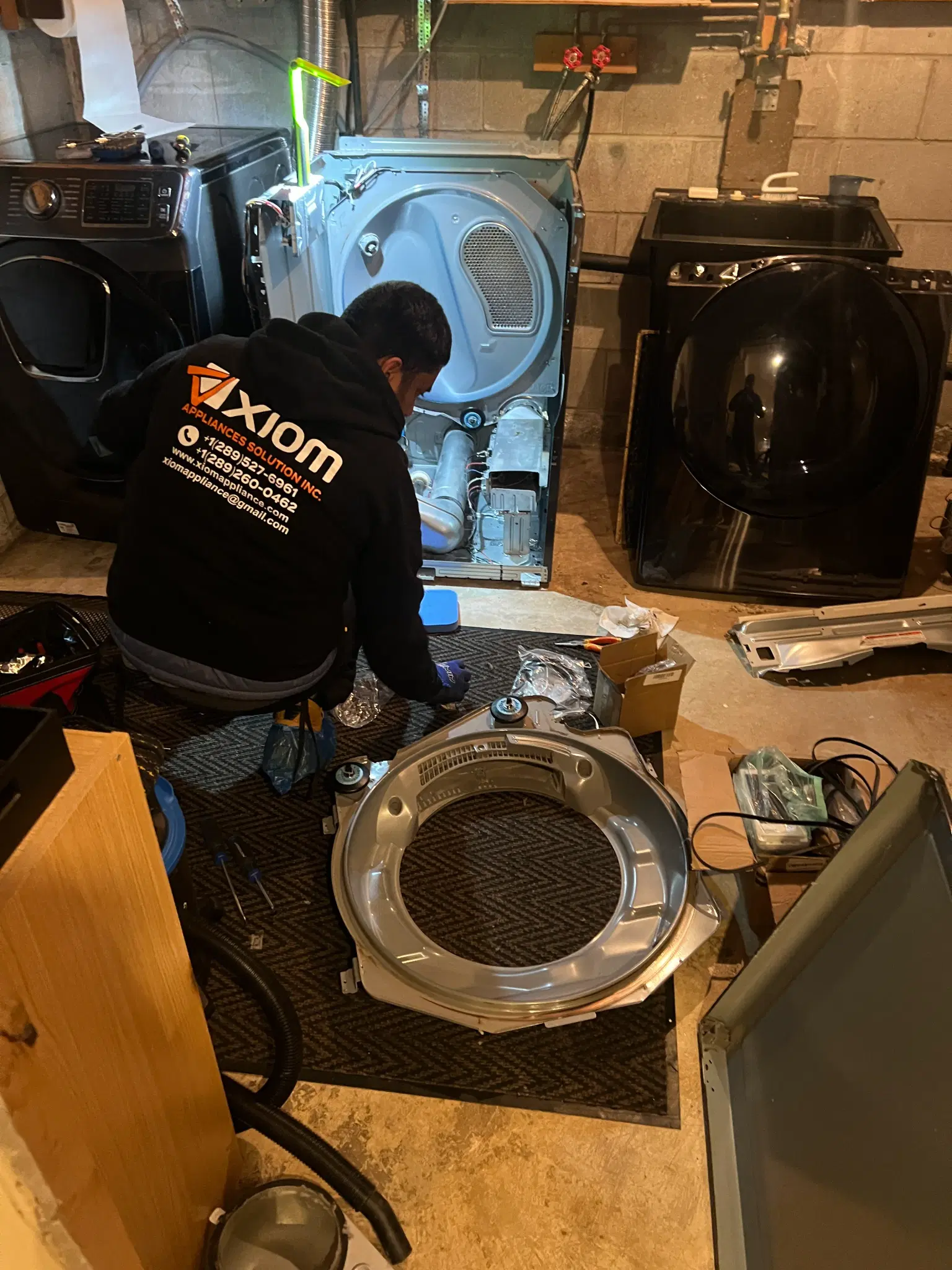
Loud Thumping or Banging: The first thing to check is your laundry load. A single heavy item, like a pair of sneakers or a large comforter, can cause the drum to become unbalanced and thump against the cabinet. If the noise persists with normal loads, the problem is likely worn-out drum rollers. These small wheels support the drum as it spins, and over time, they can flatten or wear down, causing a rhythmic thumping sound.
-
High-Pitched Squealing or Grinding: This irritating, metallic sound often points to a worn-out idler pulley. The idler pulley is a spring-loaded wheel that provides tension to the drum belt. When its bearing wears out, it creates a distinct squeal as the drum turns. In some cases, worn drum glides—small plastic or felt pads that support the front of the drum—can also cause a grinding noise.
-
Scraping or Rattling: If you hear a metallic scraping, you might have a foreign object caught in the mix. Coins, buttons, or keys can easily fall out of pockets and get stuck between the drum and the housing or caught in the blower wheel. Before you investigate, always unplug your dryer from the wall. Carefully check the drum seams and the lint filter housing for any loose objects. If the noise continues, it's best to have a technician take a look.
The Cold Shoulder: Why Isn't My Dryer Heating Properly?
Perhaps the most frustrating dryer problem is when it runs a full cycle but leaves your clothes damp. This not only wastes time but also drives up your hydro bill. Before assuming the worst, there are a few key things you can check.
1. Check Your Lint Filter and Venting: This is the number one cause of poor drying performance. A clogged lint filter or a blocked exterior vent restricts airflow, trapping moisture in the drum and preventing clothes from drying. More importantly, it's a serious fire hazard. Clean your lint filter after every single load, and check your exterior vent cap at least twice a year to ensure it's clear of lint, leaves, or snow.
2. Visit Your Breaker Panel: An electric dryer requires a significant amount of power and typically uses a double breaker. It's possible for one of the two breakers to trip, which allows the drum to spin (using one circuit) but prevents the heating element from turning on (which requires both). Check your home's breaker panel to see if the dryer's breaker needs to be reset.
If these simple checks don't solve the problem, the issue likely lies with an internal component. Common culprits include a faulty thermal fuse, a broken heating element, or, in the case of a gas dryer, a malfunctioning igniter or gas valve assembly. These repairs involve disassembling the appliance and working with electrical or gas systems, which should only be handled by a qualified professional to ensure safety and compliance with ESA standards.
When to DIY vs. When to Call a Professional
Knowing your limits is key to preventing a small problem from becoming a large, expensive one. While some tasks are perfect for a handy homeowner, others carry significant risks.
Safe DIY Tasks:
- Cleaning the lint screen after every use.
- Checking and clearing the exterior vent.
- Ensuring the dryer is level to prevent vibration.
- Checking the breaker panel.
When to Call a Professional:
- Any repair that requires taking the dryer cabinet apart.
- Replacement of internal parts like drum rollers, belts, idler pulleys, or heating elements.
- Diagnosing and fixing any electrical issue, such as a faulty thermal fuse or sensor.
- All repairs on gas dryers. Working with gas lines is dangerous and requires specialized certification.
A professional technician can accurately diagnose the problem, ensuring you don't waste money on the wrong parts. At Xiom Appliance Solutions Inc., our process is transparent. We start with a service call to identify the exact issue, and that initial fee is deducted from the total cost of the repair. This approach guarantees you receive an expert diagnosis and a clear, fair quote for the necessary work.
Get Your Dryer Running Smoothly Again
Ignoring strange dryer noises or inefficient heating doesn't just affect your laundry routine—it can compromise your home's safety and efficiency. By performing simple maintenance and knowing when to call for help, you can extend the life of your appliance and keep your household running smoothly.
If you've tried the basic troubleshooting steps and your dryer is still giving you trouble, don't hesitate to reach out. The experienced and reliable team at Xiom Appliance Solutions Inc. is here to provide expert dryer repair for residents across Hamilton and the surrounding areas. Contact us today to schedule a service call and get your laundry day back on track with our professional appliance repair services.