
Diagnosing Uneven Oven Heating and Baking Problems
There is nothing quite as frustrating as spending an afternoon carefully preparing a family dinner or a batch of holiday cookies, only to pull your pan out and discover that half of your food is burnt while the other half is undercooked. When your appliance stops performing reliably, it can throw off your entire weekly routine and lead to wasted groceries and added stress. For homeowners across Hamilton, a malfunctioning oven is a major inconvenience, especially when you are cooking for a large family or hosting guests.
At Xiom Appliance Solutions Inc, we have spent nearly a decade diagnosing and fixing complex kitchen appliance issues. We understand that modern appliances are major investments, and when they act up, you want answers quickly. The good news is that most baking inconsistencies are caused by a few specific, repairable components rather than a complete appliance failure. Before you start looking at expensive replacements, it helps to understand exactly what is going wrong inside your kitchen.
In this comprehensive guide, we will walk you through the most common culprits behind temperature fluctuations and hot spots, explain how these components are supposed to function, and help you determine when it is time to bring in a professional for safe, reliable repairs.
The Bake Element: The Heart of Your Oven
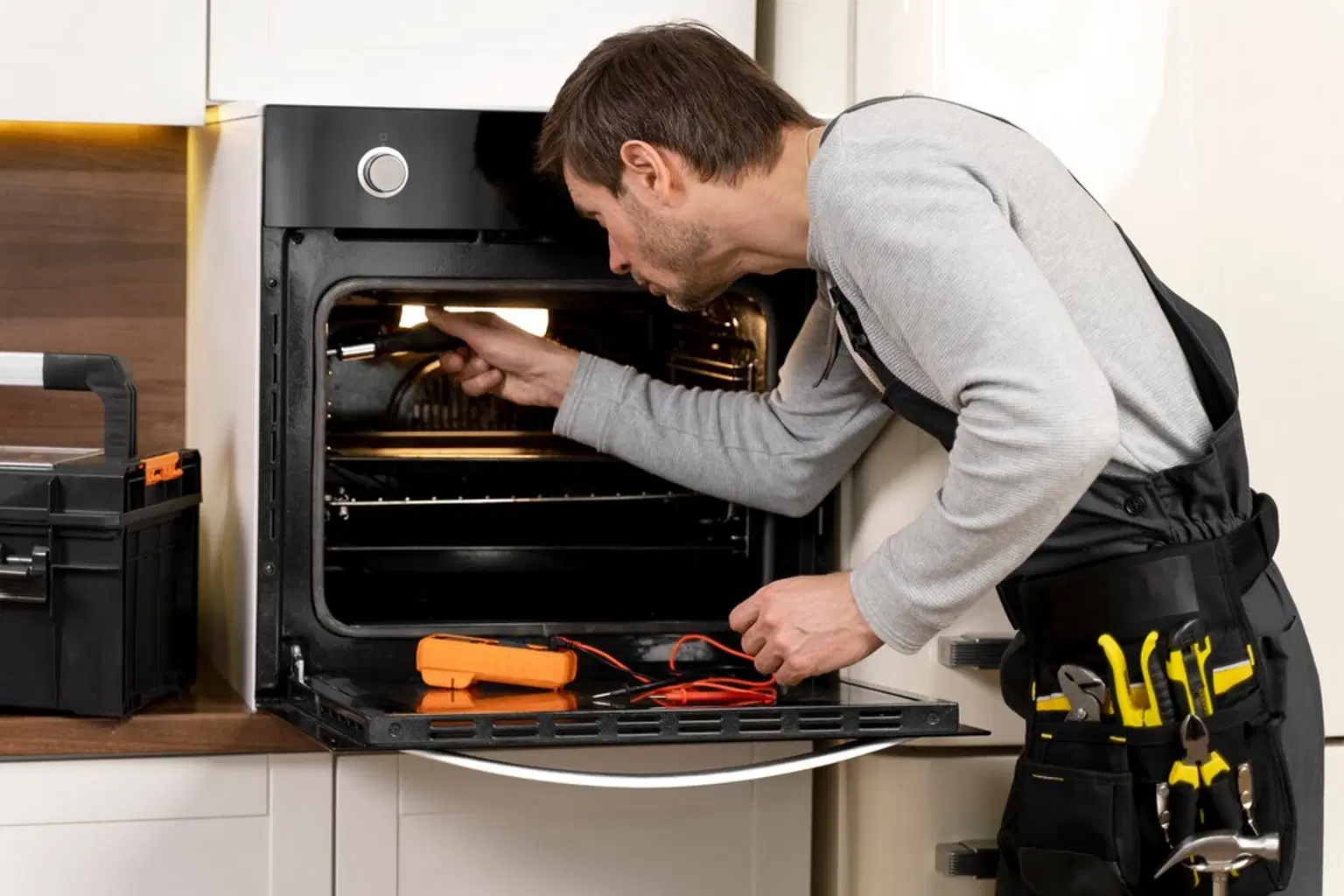
One of the most frequent issues we encounter during service calls is an oven bake element not heating evenly. The bake element is the large, typically black or gray metal coil located at the bottom of your oven cavity. When you set your appliance to bake, electricity flows through this coil, causing it to glow a bright, uniform red as it generates intense heat.
Over time and with frequent use, this heating element can blister, warp, or develop microscopic cracks. When this happens, the electrical resistance changes. You might notice that only one section of the coil glows red, or it might not glow at all. If the heat is only radiating from a small portion of the element, the air circulating inside the cavity will be entirely unbalanced. This is one of the primary reasons oven burns food on one side while leaving the other side pale and doughy.
A visual inspection is often the first step in diagnosing this problem. If you notice any distinct blistering, separation, or white chalky spots on the bottom coil, the element has likely failed and requires replacement.
Temperature Sensors and Thermostats
If the bake element looks completely fine but your appliance is still ruining meals, the next component to investigate is the temperature sensor. This small, pencil-like metal probe is usually located in the upper back corner of the oven interior. Its job is to monitor the internal ambient temperature and signal the main control board to turn the heating elements on or off to maintain your desired setting.
If this sensor becomes faulty or falls out of calibration, it sends incorrect readings to the control board. For example, you might set the dial to 350 degrees, but a bad sensor might tell the computer that the oven has reached that temperature when it is only at 250 degrees, or conversely, it might let it heat up to 450 degrees.
Homeowners with a background in basic electronics often wonder how to test electric oven temperature sensor components. The process involves disconnecting the power at the breaker panel (safety first!) and accessing the sensor's wiring harness, usually from the back of the appliance. By using a digital multimeter set to measure ohms, you can check the resistance of the sensor at room temperature. Most modern sensors will read around 1080 to 1100 ohms at room temperature, though this varies slightly by manufacturer. If the reading is completely open or severely out of range, the sensor must be replaced to restore proper heat regulation.
Convection Fan Failures and Heat Circulation
Many modern homes have upgraded to convection ovens, which use an internal fan and sometimes an additional heating element to circulate hot air rapidly around the food. This results in faster, more even cooking and superior browning. However, this added complexity means there is another moving part that can fail.
If you find your convection oven fan not spinning during cycle operations, you lose all the benefits of the convection feature. Instead of circulating, the hot air simply rises to the top of the cavity, creating massive temperature zones. The top rack becomes dangerously hot while the bottom rack stays cool.
A fan might stop spinning because the motor itself has burned out, the fan blade is physically obstructed by grease and debris, or the door switch has failed. In many models, the fan is designed to stop spinning when the door is opened to prevent blowing hot air in your face. If the door switch is faulty, the appliance thinks the door is always open and refuses to engage the fan motor. Replacing a convection fan motor or a simple door switch can immediately resolve baffling temperature zones and drastically reduce how hard your appliance has to work, which can even help tame your monthly hydro bill by improving efficiency.
The Importance of Proper Diagnostics
With so many intertwined electrical components—from main control boards and relays to sensors and heating coils—pinpointing the exact cause of baking issues requires specialized knowledge and the right diagnostic tools. Guessing which part is broken and swapping out components through trial and error is not only frustrating but can also be incredibly expensive and potentially dangerous.
Reliable Appliance Repair You Can Trust
We know that dealing with appliance repairs can feel overwhelming, especially if you have had negative experiences with unpredictable hourly rates or hidden fees in the past. At Xiom Appliance Solutions Inc, we believe in complete transparency and taking the anxiety out of the repair process for our customers, whether you live in the Lower City or up on The Mountain.
When you book a service call with us, our process is straightforward. We charge a flat diagnostic service fee of $89.99 plus tax. This fee covers the time and expertise required for our skilled technicians to come to your home, thoroughly inspect your appliance, test the electrical components safely, and determine exactly what is causing your uneven baking problems. Best of all, if you decide to proceed with the repair, that diagnostic fee is fully deducted from your total service cost. There are no surprise hourly charges—just upfront, honest pricing based on exactly what needs to be fixed.
Don't let a malfunctioning appliance ruin another family dinner or holiday celebration. If you are tired of guessing how your food will turn out, we are here to help. Explore our Oven Installation & Repair services to learn more about how we can get your kitchen running smoothly again. Contact Xiom Appliance Solutions Inc today to schedule your convenient diagnostic appointment and get back to cooking with confidence.